When the kitchen sink drain smells bad, the odor usually comes from something trapped in or around the drain. Food particles, grease, biofilm, a dirty garbage disposal, or a plumbing problem can all make a kitchen smell unpleasant.
The good news is that many sink odors have a simple cause you can check yourself. In this updated Kitchen Comfy guide, I’ll show you how to identify the source, clean the drain safely, check the P-trap and disposal, prevent the smell from returning, and know when it is time to call a plumber.
Quick answer: Start by cleaning the drain opening and any reachable buildup, then flush it with hot tap water. If you have a garbage disposal, clean the baffle and upper chamber safely. If the smell is sewer-like, returns quickly, or comes with slow drainage, gurgling, leaks, or multiple affected drains, inspect the P-trap and plumbing rather than repeatedly adding cleaning products.
- Most common causes: Food residue, grease, biofilm, disposal buildup, or a dry/dirty P-trap
- First step: Clean the drain opening and remove visible debris
- Flush: Use hot tap water; avoid boiling water if your plumbing manufacturer warns against it
- Disposal: Clean the underside of the splash guard or baffle and use cold water while grinding food
- Safety: Never mix bleach with vinegar or other acids
- Call a plumber: Persistent sewer odors, leaks, repeated backups, or suspected venting problems
Why Does The Kitchen Sink Drain Smells Bad?
A bad smell does not always mean the sink itself is dirty. The odor can come from residue inside the drain, the garbage disposal, the P-trap, or another part of the plumbing system.
Current plumbing and home-care guides consistently point to food debris, grease, bacterial buildup, disposal residue, dry traps, and blocked or poorly functioning drainage as the main causes. Lowe’s, Drano, and other current guides also emphasize regular drain maintenance and keeping grease and food scraps out of the drain.
10 Common Reasons Your Kitchen Sink Drain Smells Bad
1. Food particles are trapped in the drain
Small pieces of food can collect around the strainer, stopper, drain walls, or deeper in the pipe. As organic material sits in a warm, wet environment, bacteria can break it down and produce unpleasant odors.
Start by removing visible food and sludge from the drain opening. A small drain brush can help clean the area without pushing debris farther into the pipe.
2. Grease and cooking oil have coated the pipe
Grease can cling to pipe walls and trap additional food particles. Over time, that sticky layer can contribute to both odor and slower drainage.
Do not pour cooking oil or liquid grease into the sink. Let it cool and dispose of it according to your local waste rules instead. Lowe’s also warns that grease can harden in the drain and contribute to serious backups.
3. Biofilm and residue are growing inside the drain
A drain can look reasonably clean at the surface while a slimy film remains farther inside. That residue can hold food particles and support odor-producing bacteria.
If the smell returns soon after a quick rinse, clean the drain opening, stopper, strainer, and any accessible surfaces rather than simply masking the odor with fragrance.
4. The garbage disposal is dirty
If your kitchen sink has a garbage disposal, the disposal may be the real source of the smell. Food particles can collect in the grind chamber or beneath the rubber splash guard.
InSinkErator notes that disposal odors are commonly associated with food buildup and recommends turning off power before cleaning the baffle or upper chamber. It also advises using cold water while grinding and continuing the cold-water flow briefly afterward.
Never put your hand inside a garbage disposal. Use a brush or pad only where the manufacturer allows, and follow the instructions for your specific model.
5. The P-trap is dry
The P-trap is the curved section of pipe under the sink that holds water. That water creates a seal that helps stop sewer gases from traveling back into the room.
If a sink is rarely used, the trap can dry out. EPA guidance explains that dry traps can allow sewer gases to enter a building, while regularly used sinks are less likely to have this problem.
If the sink has not been used for several days, run water for a short time and see whether the odor disappears. If the smell returns quickly, the trap may have a leak or another plumbing problem.
6. The P-trap or drain line contains buildup
A P-trap can also collect grease, food residue, and sludge. If the sink drains slowly at the same time that it smells bad, buildup or a partial blockage becomes more likely.
Cleaning a P-trap is a more involved DIY job. Place a bucket underneath first, protect the cabinet, and follow the instructions for your pipe material and fittings. If you are not comfortable removing the trap, use a plumber instead.
7. The drain is partially blocked
A partial blockage can leave organic material sitting in the drain and can make odors worse. You may also notice slow drainage, standing water, or gurgling.
If the sink is draining slowly, a plunger can sometimes clear a soft blockage. For tougher blockages, a drain snake or professional drain cleaning may be more appropriate. Home Depot recommends treating boiling water cautiously because it can damage some PVC plumbing.
8. A dishwasher connection is contributing to the odor
Some kitchen sinks share drainage connections with a dishwasher. A clogged, kinked, or poorly routed dishwasher drain hose can contribute to drainage problems and odors around the sink area.
If the smell appears mainly when the dishwasher runs, inspect the dishwasher drain connection and filter as well as the sink drain. Home Depot notes that dishwasher drain hoses may connect to the sink drain or garbage disposal and should be checked for kinks or blockages.
9. A plumbing vent or sewer-gas problem is involved
A strong rotten-egg or sewage-like odor deserves more attention than an ordinary food smell. If the smell persists after cleaning, returns quickly, affects multiple drains, or comes with gurgling, leaks, or repeated drainage problems, the cause may be deeper in the plumbing system.
Do not keep pouring stronger cleaners down the drain in that situation. Sewer-gas problems and venting issues can require professional inspection.
Some sinks have an overflow opening or hidden channel near the upper rim. Food residue, grease, and moisture can collect there and create a musty smell that seems to come from the drain.
If your sink has an overflow opening, clean the reachable area with a suitable brush and rinse it thoroughly. Do not force tools deep into a hidden channel or use chemicals that the sink manufacturer does not recommend.
What the Smell Is Telling You
| What you notice | Likely source | What to check first |
|---|---|---|
| Food or sour smell | Food, grease, or biofilm | Drain opening, strainer, and disposal |
| Smell is worse after dishes | Residue disturbed by water | Drain walls, disposal splash guard, and P-trap |
| Rotten-egg or sewage smell | Dry trap or sewer-gas problem | P-trap water seal and plumbing |
| Smell plus slow drainage | Partial blockage or buildup | Drain, P-trap, and blockage |
| Smell when dishwasher runs | Drain-hose or connection issue | Dishwasher filter, hose, and sink connection |
This symptom-based approach is useful because a smelly drain is not always a cleaning problem. Current guides increasingly separate ordinary food and grease odors from dry-trap, disposal, dishwasher, and venting problems instead of recommending the same cleaner for every situation.
How to Get Rid of a Bad Kitchen Sink Drain Smell
Use this order instead of randomly trying several cleaners. It helps you identify the source while avoiding unnecessary chemical combinations.
Step 1: Remove visible debris
Put on cleaning gloves and remove food scraps, sludge, or other visible material from the drain opening and strainer. Clean the stopper if it is removable.
Step 2: Clean the drain opening
Use a small drain brush or old toothbrush to scrub reachable residue around the drain opening. Rinse the area with hot tap water.
Step 3: Flush with hot tap water
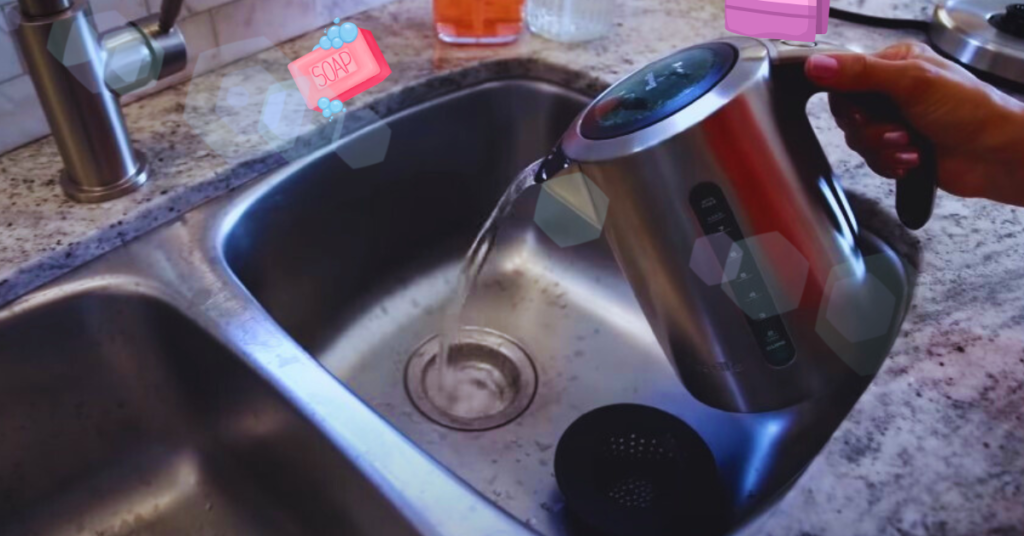
Run hot tap water through the drain for a few minutes to help carry away loosened residue. Do not assume that boiling water is safe for every plumbing system. If your pipes are PVC or your manufacturer gives different instructions, follow those instructions instead.
Step 4: Clean a garbage disposal, if you have one
Turn off power before cleaning the disposal area. Clean the underside of the rubber splash guard or baffle where food residue can collect. InSinkErator specifically warns against putting your hand into the disposal.
After cleaning, use a moderate flow of cold water when operating the disposal and continue the cold water briefly after grinding. Avoid pouring grease or fat into the disposal.
Step 5: Try baking soda and vinegar only as a simple maintenance option
Baking soda and vinegar are popular home-cleaning ingredients, and current home-improvement guides still describe them as an option for minor drain buildup. However, the fizzing reaction does not magically dissolve every blockage, and mixing cleaners indiscriminately is not a good strategy. Lowe’s and Home Depot both describe baking soda followed by vinegar for some minor drain-cleaning situations.
Most importantly, never mix vinegar with chlorine bleach. Poison Control warns that the combination can release irritating chlorine gas.
What If the Kitchen Sink Still Smells Bad After Cleaning?
If the odor disappears for a few hours and then returns, look for the source instead of repeating the same cleaning routine indefinitely.
- Smell returns after the sink sits unused: check for a dry or faulty P-trap.
- Smell gets worse when water runs: inspect for food, grease, biofilm, or a partial blockage. Our guide on why a kitchen sink smells bad when water runs covers this specific symptom.
- Smell resembles rotten eggs or sewage: read our guide to a kitchen sink that smells like rotten eggs or sulfur and consider professional plumbing help if the odor persists.
- There is slow drainage or standing water: treat it as a possible blockage rather than only an odor problem.
- Several drains smell at once: the issue may be beyond one sink and deserves professional inspection.
How to Clean the P-Trap Safely
If you suspect the P-trap is dirty and you are comfortable doing basic plumbing work, place a bucket underneath the trap before loosening anything. Open the connections carefully, let the trapped water drain into the bucket, remove the buildup, and reinstall the trap without forcing the fittings.
Check carefully for leaks after reassembly. If a fitting is corroded, damaged, stuck, or leaking after reassembly, stop and get professional help rather than overtightening it.
How to Prevent Kitchen Sink Drain Odors
- Scrape food scraps into the trash or compost before washing dishes.
- Never pour cooking grease or oil down the drain.
- Use a sink strainer to catch food particles.
- Clean the drain opening and stopper regularly.
- If you have a garbage disposal, clean the splash guard and follow the manufacturer’s operating instructions.
- Run water through an infrequently used sink so the trap stays filled.
- Deal with slow drainage early instead of waiting for a full blockage.
- Clean the sink basin and drain area regularly. Better Homes & Gardens recommends routine sink cleaning and notes that odors and slow drainage can be signs that the sink needs attention.
My Kitchen Comfy Cleaning Perspective
When a kitchen sink drain smells bad, I prefer to diagnose the odor before reaching for a stronger cleaner. A food smell, a rotten-egg smell, and an odor that appears only when water runs can point to different problems.
My first move is simple: remove visible debris, clean the drain opening, flush with hot tap water, and check the disposal if there is one. If the odor keeps returning, I move my attention under the sink and look at the P-trap and drainage behavior.
That approach is more useful than trying a new chemical every time the smell comes back. It also helps avoid unnecessary cleaner combinations that can create dangerous fumes.
When Should You Call a Plumber?
Call a qualified plumber when the smell is persistent or strongly sewer-like, especially if you also notice leaks, repeated backups, significant slow drainage, gurgling, or odors from multiple fixtures.
You should also stop DIY work if a P-trap or drain connection is damaged, corroded, or difficult to remove. A recurring sewer-gas odor is not something to cover up with fragrance or repeated drain treatments.
Frequently Asked Questions
What causes a kitchen sink drain to smell bad?
The most common causes are trapped food, grease, biofilm, garbage disposal buildup, a dirty or dry P-trap, and partial drainage problems. Persistent sewer-like odors can point to a plumbing or venting issue.
Why does my kitchen sink smell bad when the water runs?
Running water can disturb or push air through food and grease buildup in the drain. It can also reveal a partial blockage or another drainage problem. See our guide on kitchen sink odors when water runs for more detail.
Why does my kitchen sink smell like rotten eggs?
A rotten-egg or sewage-like smell can be associated with sewer gas, a dry or faulty trap, or another plumbing issue. If cleaning does not solve it or the smell returns quickly, have the plumbing checked.
Can I use baking soda and vinegar to clean a smelly sink drain?
They can be used as a minor drain-cleaning option, but they are not a universal fix for deep blockages. Never mix vinegar with bleach or other incompatible cleaners.
How often should I clean my kitchen sink drain?
There is no single schedule for every household. Clean the drain when residue or odors begin to develop, and make routine drain and sink cleaning part of your normal kitchen maintenance.
Final Thoughts
If your kitchen sink drain smells bad, start with the basics: remove food residue, clean the drain opening, flush with hot tap water, and check the garbage disposal and P-trap. These steps solve many everyday odor problems without turning the drain into a chemistry experiment.
If the odor keeps returning, smells strongly like sewage, or comes with leaks, gurgling, slow drainage, or repeated backups, treat it as a plumbing problem rather than a cleaning problem. That is the point where professional inspection can save time and prevent a small issue from becoming a larger one.
Kitchen Comfy focuses on practical kitchen care, and the goal here is simple: help you identify the real source of the smell and fix it safely.

JAKARIA is a seasoned expert in kitchen appliances and cooking techniques. With years of hands-on experience and in-depth knowledge, he has a knack for solving common kitchen appliance issues. He also offers expert guidance to help you achieve culinary success and create amazing meals effortlessly.