
How hot does a frying pan get on a stovetop? There is no single temperature. The result depends on the burner, pan material, cooking time, food, and whether the pan is empty. Understanding those differences helps you cook evenly and avoid overheating.
Quick answer
A frying pan can become much hotter than the food inside it. Many everyday frying tasks use moderate heat, while searing needs a hotter surface. The number on the stove dial is not a pan temperature. Nonstick, stainless steel, cast iron, and enameled pans also have different care limits—always follow your pan’s instructions.
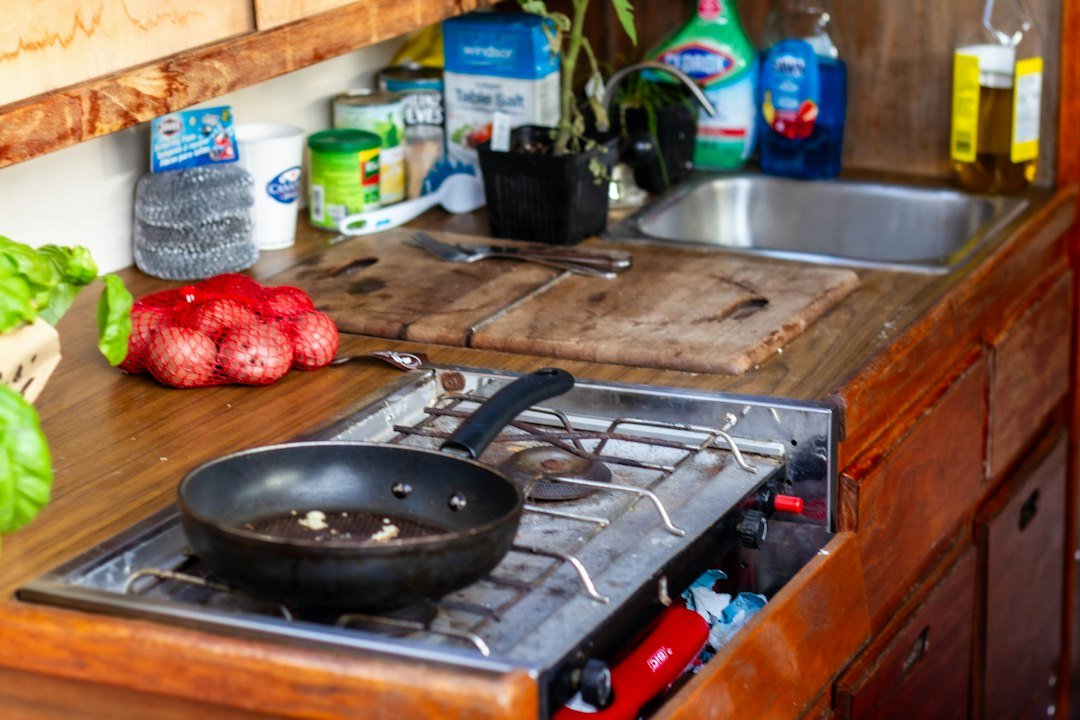
Why your pan temperature is not the same as the burner setting
A gas flame or electric element supplies heat; it does not control the pan surface to a precise temperature. Pan thickness, burner size, how long it has heated, and whether you add cold ingredients all change the actual surface temperature. An empty pan on high can overheat surprisingly quickly.
What counts as low, medium, and high heat?
- Low heat: gentle warming, melting butter, or cooking delicate foods with little browning.
- Medium heat: a useful starting point for eggs, vegetables, pancakes, and everyday sautéing, depending on the pan.
- Medium-high or high: used for some searing or quick frying, generally with cookware suited to the task and careful supervision.
These are cooking descriptions, not guaranteed temperature bands. Two different stoves set to medium can produce very different pan temperatures.
How different frying pans handle heat
Stainless steel
Stainless steel pans can work well for browning and searing, but preheating should be controlled. Many manufacturers recommend moderate heat for most cooking because heat spreads through the pan after a short preheat. Avoid leaving an empty pan unattended.
Cast iron
Cast iron holds heat well and responds slowly to changes in burner setting. Gradually warm the skillet on low or medium before increasing heat when needed. This helps reduce hot spots, protect enamel on coated cast iron, and give you more control.
Nonstick pans
Nonstick coatings require extra care. The maximum permitted heat depends on the product and its handle or lid. All-Clad’s care instructions advise low-to-medium cooking heat for its nonstick products and warn against heating an empty pan on high. Do not assume every nonstick pan is safe at the same temperature.
Enameled cast iron
Le Creuset recommends low-to-medium heat and gradual heating for its enameled cast iron. Its stated oven limits vary by the handles and lids fitted to the product. Oven temperature ratings are not a license to leave cookware empty over a high burner.
How to tell whether a frying pan is ready
- Follow the recipe: start at the recommended setting and adjust gradually.
- Watch the oil: it should flow easily and shimmer for many sautéing tasks; smoke means it is overheating.
- Observe the food: steady gentle sizzling is usually more useful than a dial number.
- Use suitable equipment: a surface thermometer can help, but infrared thermometers may misread shiny metal unless properly calibrated for emissivity.
Safety reminder
Never leave a heating pan unattended. If oil smokes, turn the heat down and let the pan cool safely. Never add water to a grease fire. Check the cookware maker’s maximum limits before placing the pan in an oven, using a broiler, or cooking at very high heat.
Can a frying pan get too hot?
Yes. Excessive heat can burn food and oil, damage coatings, warp some pans, and damage handles. Higher heat does not automatically make food cook better. Start lower, allow time for the pan to warm, and increase only if the recipe and cookware call for it.
Frequently asked questions
How hot is a frying pan on medium?
There is no universal number. Medium on one stovetop can be hotter than medium on another. Test results also change with the pan material and whether food is inside it.
Can I use high heat on nonstick pans?
Use the manufacturer’s care instructions. Many nonstick makers advise low or medium heat, especially when the pan is empty. High-heat searing may be better suited to compatible stainless steel or uncoated cast iron.
What if my oil starts smoking?
Turn down or switch off the heat and let the pan cool. Smoking oil is a sign the pan is too hot for that oil and cooking method.
The bottom line
A frying pan has no fixed stovetop temperature. Choose heat for the food and the cookware, pay attention to smoke and sizzling, and adjust gradually. That is more reliable than treating low, medium, and high as exact degrees.
Sources and further reading

JAKARIA is a seasoned expert in kitchen appliances and cooking techniques. With years of hands-on experience and in-depth knowledge, he has a knack for solving common kitchen appliance issues. He also offers expert guidance to help you achieve culinary success and create amazing meals effortlessly.