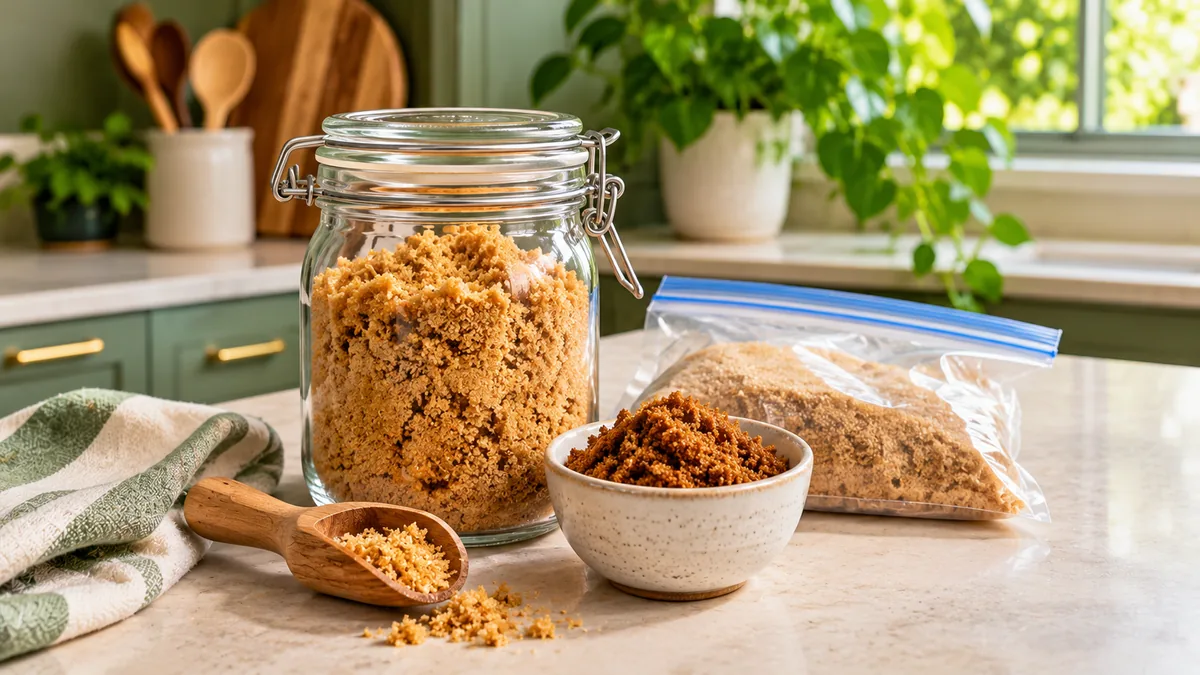
You open the pantry, grab the brown sugar for a batch of cookies, and find a solid brick instead of soft, scoopable sugar. Sound familiar? The good news is that a little planning can keep that from happening again.
So, can you freeze brown sugar? Absolutely. Freezing can help when you’ve bought a big bag or won’t use it for a while. But you don’t need to take up freezer space for the brown sugar you use every week. A good airtight container in the pantry is usually the easier solution.
Quick Answer
Yes, you can freeze brown sugar. Pack it in a moisture-proof, airtight freezer bag or container and seal it well. For everyday baking, store it tightly closed in a cool pantry instead. When you’re ready to use frozen brown sugar, let it thaw and fluff any clumps with a fork. Don’t refrigerate it as your regular storage method.
Should You Freeze Brown Sugar or Keep It in the Pantry?
The best storage spot depends on how often you bake. Brown sugar gets its soft texture from moisture associated with its molasses coating. As that moisture escapes into the air, the sugar hardens. A well-sealed package helps slow the process. You don’t need to chill it just to keep it fresh.
| Where to store it | Best for | What to do |
|---|---|---|
| Pantry | Regular use | Keep in an airtight container or heavy resealable bag, away from heat and strong odors |
| Freezer | Longer storage or very dry homes | Wrap tightly, remove extra air, label, and thaw before scooping |
| Refrigerator | Not recommended for routine storage | Skip it; temperature and humidity changes can make the texture harder to manage |
This matches Domino Sugar’s published storage advice: use a tightly sealed container, avoid the refrigerator, and consider freezing in very dry conditions or for long storage. If you bake often, a jar you can open and reseal in seconds is far more convenient than a frozen bag.
How to Freeze Brown Sugar in 6 Simple Steps
There’s no special freezer trick here. Keeping outside air and excess moisture away from the sugar is what matters most.
- Check the sugar first.
Make sure it’s clean and dry, with no signs of pests, mold, unusual odors, or wet contamination. A few hard clumps are not the same as spoilage.
- Divide a large bag into useful portions.
If you usually bake one batch of cookies at a time, smaller freezer bags mean you won’t need to repeatedly thaw the entire supply. Leave one portion in your pantry if you’ll use it soon.
- Choose a freezer-safe, moisture-proof container.
A heavy-duty zip-top freezer bag works well. You can also use a clean, dry freezer-safe food-storage container with a snug lid. Don’t rely on the original paper bag by itself.
- Push out extra air and close tightly.
Flatten the bag gently before sealing, or make sure the lid is firmly closed. For added protection, place a sealed bag inside another freezer-safe bag or container.
- Label the package.
Write “brown sugar” and the date on the bag. That’s useful when the freezer starts looking like a collection of mystery packages.
- Freeze in a stable spot.
Keep the package closed and away from items that might tear it. Try not to move it between the freezer and counter over and over again.
Kitchen tip: If the bag arrived with a good resealable zipper, you may be able to store it inside an additional heavy-duty freezer bag. The key is a dependable moisture-proof seal, not a fancy container.
How to Thaw Frozen Brown Sugar Without Making a Sticky Mess
Don’t worry if frozen brown sugar feels firm when you first take it out. That’s normal. You want it to come back to a usable temperature without collecting water from the kitchen air.
- Take out only the portion you need.
Set the sealed bag or container on the counter. Keep the lid or zipper closed as the sugar warms up.
- Allow time to thaw.
Domino Sugar suggests about 2 to 3 hours for frozen brown sugar. Larger, tightly packed portions may need more time.
- Open and fluff with a fork.
Once thawed, gently break apart clumps. If ice crystals formed during a long stay in the freezer, stir as it thaws to avoid concentrated pockets of moisture.
- Reseal what you don’t use.
Return the remainder to an airtight pantry container once the sugar is thawed and free of excess condensation.
A dry measuring cup and a clean scoop help, too. Don’t add water directly to the whole bag in an attempt to speed things up. Too much moisture can make it sticky instead of fluffy.
Why Does Brown Sugar Get Rock Hard?
Brown sugar isn’t broken just because it’s hard. The molasses coating gives it its color, flavor, and familiar soft texture. When the sugar loses moisture during storage, the crystals cling together into a firm mass.
This is different from white granulated sugar, which usually clumps when it absorbs too much moisture. That’s one reason a good storage container matters so much. Utah State University Extension also recommends airtight, odor-proof packaging for sugar storage.
How to Soften Brown Sugar That Has Already Hardened
If you’re halfway through a recipe, don’t toss the bag. Depending on how much time you have, there are several practical ways to bring usable texture back.
Need it now
Microwave a small amount
Put the sugar you need into a microwave-safe bowl. Cover with a damp, not dripping, paper towel. Heat briefly, checking and loosening it with a fork every 15 to 30 seconds. Microwave power varies. The sugar can get hot and firm up again as it cools, so use it promptly.
Have a little time
Use a low oven
Domino and C&H describe softening hard sugar in a 250°F oven. Place it in an oven-safe dish, watch carefully, and remove it as soon as it softens. Hot sugar can burn, so let the pan cool before handling and measure the sugar you need promptly.
Plan ahead
Try a food-safe terra-cotta saver
Use a brown sugar saver according to its package directions, then seal it with the sugar in an airtight container. It gradually restores moisture, which makes this a handy option for people who bake regularly.
Overnight option
Add bread or a damp towel
Place a slice of bread or damp paper towel protected by foil or plastic wrap in the airtight container. Let the moisture soften the sugar, then remove the item when it works, generally within about two days. Don’t leave perishable items in the container indefinitely.

For manufacturer-backed details, see Domino’s softening methods and C&H’s guidance. Never microwave a sealed glass jar, closed bag, or container that isn’t microwave-safe.
How to Keep Brown Sugar Soft After Opening
You don’t need six different storage gadgets. In most kitchens, one container with a reliable seal does the trick. Keep it out of direct sunlight and away from the stove or dishwasher heat. Scoop with dry utensils and shut the lid when you’re done.
If your cabinet is crowded, put baking ingredients you use often where you can reach them and move rarely used extras to a separate shelf. Our small-kitchen organization checklist has more ideas for keeping pantry supplies easy to find.
What not to do: Don’t leave brown sugar in a torn paper bag, repeatedly put a wet spoon in the jar, or keep adding water whenever it feels firm. An airtight seal beats repeated rescue attempts.
How Long Does Brown Sugar Last?
Properly stored brown sugar is very shelf-stable. Manufacturers describe a long shelf life, but recommended periods for best flavor and texture vary. The useful distinction is between food quality and food safety. Brown sugar doesn’t become unsafe simply because it’s hardened or passed a printed best-by date.
For the best baking results, use it while it still has a pleasant molasses aroma and a crumbly texture. If it has visible mold, signs of insects, an unusual smell, or evidence of contamination, discard it rather than trying to soften it.
Freezing doesn’t make questionable sugar good again. It is a storage option for sugar that is already clean and in good condition.
Frequently Asked Questions About Freezing Brown Sugar
Can you freeze light and dark brown sugar?
Yes. Both can be sealed and frozen for longer storage. Dark brown sugar has a stronger molasses flavor, but the basic storage steps are the same.
Can you put the original bag of brown sugar in the freezer?
If it is a sturdy, tightly sealing moisture-proof package, it may be suitable. An ordinary paper bag is not good freezer protection. A heavy-duty freezer bag around the original package is an easy backup.
Does brown sugar need to be refrigerated after opening?
No. For routine storage, a cool pantry and an airtight container are the better choice. Domino specifically advises against keeping brown sugar in the refrigerator.
How long does it take frozen brown sugar to thaw?
Allow roughly two to three hours at room temperature as a starting point, according to Domino. A large solid block can take longer. Fluff it with a fork once it is ready.
Is hard brown sugar still okay to use?
Usually, yes. Hardening generally means the sugar lost moisture, not that it spoiled. Check for mold, pests, strange odors, or other contamination before using it.
Can you freeze brown sugar more than once?
It is better to divide the sugar into portions so you do not need to repeatedly thaw and refreeze the same bag. Repeated temperature changes can make moisture and clumps more difficult to manage.
How do you keep brown sugar soft without a special container?
Use a clean, heavy resealable bag and press out extra air each time you close it. Put that inside another lidded container if the zipper isn’t reliable. A fancy pantry jar is optional.
Bottom line: Keep your everyday brown sugar sealed in the pantry. Freeze extra portions when you need longer storage, let them thaw before baking, and use a gentle moisture-restoring method if the sugar has already hardened. A well-sealed container saves more trouble than any last-minute trick.

JAKARIA is a seasoned expert in kitchen appliances and cooking techniques. With years of hands-on experience and in-depth knowledge, he has a knack for solving common kitchen appliance issues. He also offers expert guidance to help you achieve culinary success and create amazing meals effortlessly.